
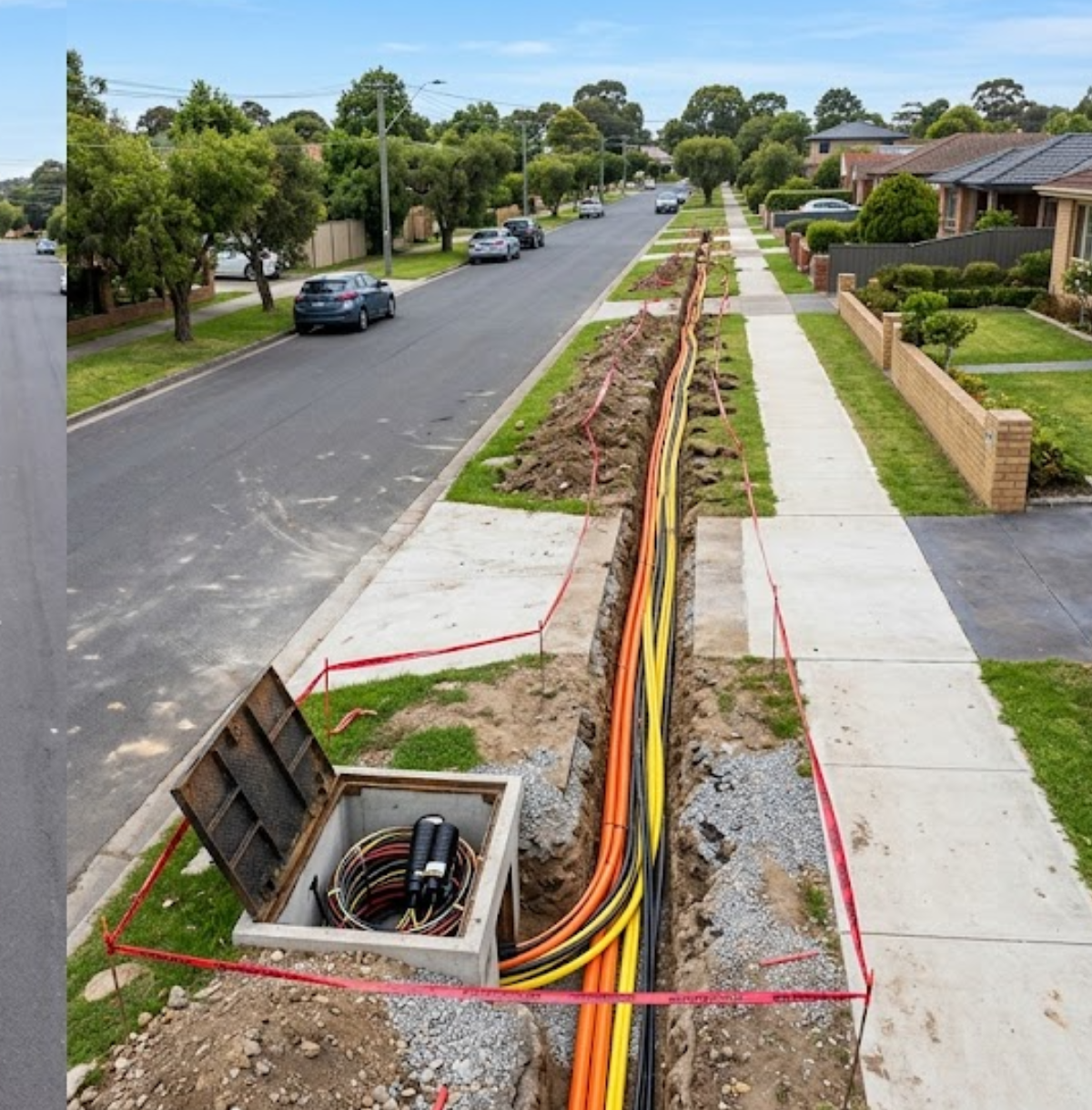
Fibre can reach a property two ways: strung along poles overhead, or buried in a trench underground. Network operators usually choose based on the area, but it helps to understand why, especially if you’re a developer or body corporate with a say in the build.
Aerial Installation: Faster and Cheaper to Build
Running cable on existing poles avoids trenching altogether, which makes aerial builds quicker and less disruptive to roads and driveways. It’s common in areas with existing pole infrastructure and lower-density housing. The trade-off is visibility and exposure to weather, tree growth, and pole damage.
Underground Installation: More Durable, More Civil Work
Underground fibre is trenched and ducted below the surface, which protects it from weather and accidental damage and keeps streetscapes free of overhead cable. It requires more civil work upfront, careful coordination around existing services like water and power, and proper reinstatement once the cable is in. It’s the standard for estates, commercial developments, and areas where aerial infrastructure isn’t practical or allowed.
Which One Applies to Your Project
New developments and estates are almost always underground by design or municipal requirement. Existing suburbs with pole infrastructure often go aerial for speed and cost. Simunandi Green carries out both aerial and underground civil works for fibre networks, and can advise on which approach suits a specific site during the planning stage. Get in touch if you’re weighing this up for an upcoming project.