
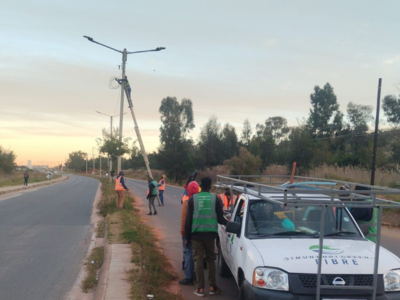
A strong tender submission gets disqualified more often over missing documentation than over price. CSD registration, CIDB grading, and the right sector certifications are the administrative foundation procurement teams check before they even reach the technical proposal. This guide walks through what each of these requirements actually means, and what a tender-ready contractor has in place before the request for proposals lands.
The Central Supplier Database (CSD)
The CSD is National Treasury’s central registration system for suppliers wanting to do business with South African government departments, municipalities, and state entities. A supplier registers once, submits the required documentation, and that registration is then referenced across multiple tender processes rather than resubmitted from scratch each time.
For procurement teams, an active and up-to-date CSD registration is usually a non-negotiable first check. A tender submission from a contractor without a valid CSD number, or with outdated details on file, is at risk of disqualification before evaluators even reach the price schedule.
Keeping a CSD registration current is an ongoing task, not a once-off setup. Banking details, company registration information, and BBBEE status all need to stay updated on the database, since an outdated CSD record can hold up a tender submission just as effectively as never registering at all.
CIDB grading
The Construction Industry Development Board (CIDB) grades contractors by class of work and contract value they are permitted to tender for. Grading exists to match contractor capacity to project scale, protecting clients from awarding large contracts to contractors without the demonstrated capability or financial standing to deliver them.
A contractor’s CIDB grading directly determines which tenders they are eligible to submit for. Bidding above a contractor’s grading is not just risky, it is typically not permitted under the tender rules. Confirming that a shortlisted contractor’s grading matches the value and class of the work is a basic, non-negotiable check.
Grading is also something contractors need to actively manage and grow over time. A contractor aiming to bid on larger civil or commercial projects needs to build the financial and project track record required to move up a grade, which is one more reason a documented history of successfully completed projects matters beyond simply satisfying a reference check.
BBBEE status as a scored requirement
Beyond eligibility checks, BBBEE status contributes directly to the scored evaluation criteria in most public sector and many corporate tenders. A contractor’s BBBEE level, verified through an accredited agency, converts into points that sit alongside price and functionality in the final evaluation.
This is a separate consideration from CSD and CIDB, both of which are largely pass or fail eligibility gates. BBBEE status is a scoring factor that can meaningfully shift the outcome between closely matched bidders, particularly on tenders where the price gap between shortlisted contractors is small.
Sector-specific certification
Beyond the general procurement requirements, certain project types carry their own accreditation requirements. Fibre build and maintenance work in South Africa runs through CAC certification, covering civil works such as trenching and reinstatement, and FAC certification, covering fibre-specific work such as splicing, testing, and cutovers. Network operators typically require both before adding a contractor to an approved panel.
A contractor bidding on fibre-related civil or construction work without these accreditations is unlikely to clear the technical evaluation stage, regardless of how strong the rest of the submission is.
Insurance, health and safety, and supporting documentation
Beyond the headline registrations, most tender submissions also require proof of relevant insurance cover, a documented health and safety plan, and evidence of compliance with occupational health and safety regulations for the sites involved. These requirements are often listed deep in the tender document, and missing one can disqualify an otherwise strong submission just as effectively as a lapsed CSD registration.
Keeping this documentation current, rather than assembling it against a submission deadline, is one of the simplest ways a contractor can improve their tender success rate without changing anything about their price or technical proposal.
A tender readiness checklist
Before a request for proposals arrives, a tender-ready contractor should already have the following in place, rather than scrambling to assemble it against a submission deadline.
- Active, up-to-date CSD registration with current company and banking details on file
- CIDB grading appropriate to the class and value of work the contractor intends to bid on
- A current BBBEE certificate from an accredited verification agency
- Sector-specific accreditation relevant to the work, such as CAC and FAC certification for fibre projects
- Company registration and VAT documentation readily available for submission
- A reference list with contactable clients and project details that support the technical proposal
- Proof of relevant insurance and health and safety compliance documentation
Common reasons tenders get disqualified
Evaluators disqualify submissions for administrative reasons far more often than most bidders expect. Knowing the common causes makes them easy to avoid.
- Lapsed or outdated CSD registration details discovered during verification
- CIDB grading that does not cover the value or class of the tendered work
- An expired or unverifiable BBBEE certificate submitted with the tender documents
- Missing insurance or health and safety documentation required by the tender conditions
- Reference contacts that could not be reached or did not confirm the details submitted
How long the compliance process actually takes
Contractors new to tendering sometimes underestimate how long it takes to become genuinely tender-ready. CSD registration itself can be completed relatively quickly once documentation is in order, but BBBEE verification, CIDB grading applications, and sector accreditation such as CAC and FAC certification typically run on their own review timelines, often measured in weeks rather than days, particularly during peak verification periods.
This is the practical reason compliance needs to be treated as ongoing maintenance rather than a task triggered by a specific tender opportunity. A contractor who waits until a request for proposals is published to start any of these processes has, in most cases, already missed the submission window before the paperwork is even complete.
What a tender-ready contractor looks like in practice
A tender-ready contractor can produce a current BBBEE certificate, an active CSD number, appropriate CIDB grading, and sector accreditation on request, without needing days to track any of it down. That readiness is not incidental. It reflects a business that treats compliance as part of ongoing operations rather than a hurdle to clear each time an opportunity appears.
For procurement teams evaluating multiple bidders, response speed on documentation requests is itself a useful signal. A contractor who produces everything promptly is more likely to be one whose internal systems are in order more broadly, which tends to correlate with how well they manage the project itself once awarded.
A procurement-side checklist before shortlisting
Use this as a quick reference when evaluating bidders against the requirements covered above.
- Confirm CSD registration status directly rather than relying on a claim in the proposal
- Match CIDB grading to the specific class and value of the tendered work
- Verify the BBBEE certificate’s issuing agency and current expiry date
- Confirm sector-specific accreditation relevant to the scope of work
- Request insurance and health and safety documentation as part of the initial submission, not after shortlisting
- Call at least two references and ask about timeline, communication, and problem resolution specifically
Why this matters before the tender, not during it
Every item above takes time to obtain or renew: CIDB grading applications, BBBEE verification, CSD updates, and sector accreditation all run on their own timelines, none of which move faster because a tender deadline is approaching. Contractors who treat compliance as ongoing maintenance, rather than a scramble triggered by each new opportunity, submit stronger tenders and win more of them.
Frequently Asked Questions
What is the difference between CSD registration and CIDB grading?
CSD registration is an eligibility requirement for doing business with South African government and state entities, confirming a supplier’s core company details. CIDB grading is specific to construction contractors and determines the class and value of construction work they are permitted to tender for.
Can a contractor bid on a tender above their CIDB grading?
Generally no. CIDB grading exists specifically to match contractor capacity to project scale, and tenders typically require bidders to hold a grading that covers the value and class of the work being tendered.
Does BBBEE status affect tender eligibility or just scoring?
In most public sector and many corporate tenders, BBBEE status is a scored evaluation criterion that sits alongside price and functionality, rather than a strict eligibility gate. A stronger BBBEE level can meaningfully improve a contractor’s competitive position against closely matched bidders.
What certifications does a fibre construction contractor need for network operator panels?
Network operators typically require CAC certification for civil works such as trenching and reinstatement, and FAC certification for fibre-specific work such as splicing, testing, and cutovers, before adding a contractor to an approved panel.
How can a contractor move up a CIDB grade?
Moving up a grade generally requires demonstrating financial capacity and a track record of successfully completed projects at or near the upper limit of the current grade. This is one reason a documented reference history matters beyond individual tender submissions.
What supporting documents besides CSD and BBBEE certificates are commonly required in a tender?
Most tenders also require proof of relevant insurance cover, a health and safety plan, and evidence of compliance with occupational health and safety regulations for the sites involved, alongside company registration and VAT documentation.
Why do administrative issues disqualify more tenders than price does?
Tender evaluation processes typically apply eligibility checks, CSD status, CIDB grading, valid certification, before comparing price and technical merit. A submission that fails an eligibility check is disqualified before price is even considered, regardless of how competitive it might have been.
Can a new contractor without an established track record still get CIDB graded?
Yes, contractors typically enter the CIDB grading system at a lower grade appropriate to their current financial capacity and project history, then build toward higher grades as they complete projects successfully and demonstrate greater capacity.
Do subcontractors need their own CSD registration?
Requirements vary by tender, but subcontractors performing a material portion of the work are often required to hold their own valid registrations and certifications, particularly for specialised scopes such as fibre-specific work requiring FAC certification.
What does it signal when a contractor can produce compliance documentation quickly?
It typically indicates the contractor treats compliance as ongoing business practice rather than a task handled reactively for each opportunity, which often correlates with how well the same contractor manages documentation and process once a project is underway.
Does a strong BBBEE level make up for a weaker technical proposal?
No. BBBEE contributes points within the overall evaluation, but it does not override eligibility gates such as CIDB grading or a poorly scoring technical proposal. A competitive tender needs to perform reasonably well across all scored categories, not rely on a single strong element.
Should a contractor budget time and cost for maintaining compliance documentation?
Yes. Renewing BBBEE certification, keeping CSD details current, and maintaining CIDB grading and sector accreditation all carry ongoing cost and administrative time, which is worth budgeting for as a standing business expense rather than a one-off cost tied to a single tender.
Does a joint venture between contractors affect CSD or CIDB requirements?
Joint ventures typically need to meet the combined and individually verified compliance standards of the tender, and each partner’s registrations, CSD, CIDB grading, and BBBEE status, are usually assessed as part of evaluating the joint venture’s overall eligibility.
How should a procurement team weigh price against compliance and track record?
Most formal tender processes apply a defined scoring split between price, functionality, and BBBEE contribution rather than leaving it to informal judgement. Even outside a formal tender, treating compliance and track record as filters before comparing price helps avoid awarding work to a bidder who cannot actually deliver it.
Simunandi Green is a BBBEE compliant, CAC and FAC certified civil and fibre construction contractor with an active CSD registration and a verifiable reference list. Get a quote and request our compliance documentation for your next tender.