
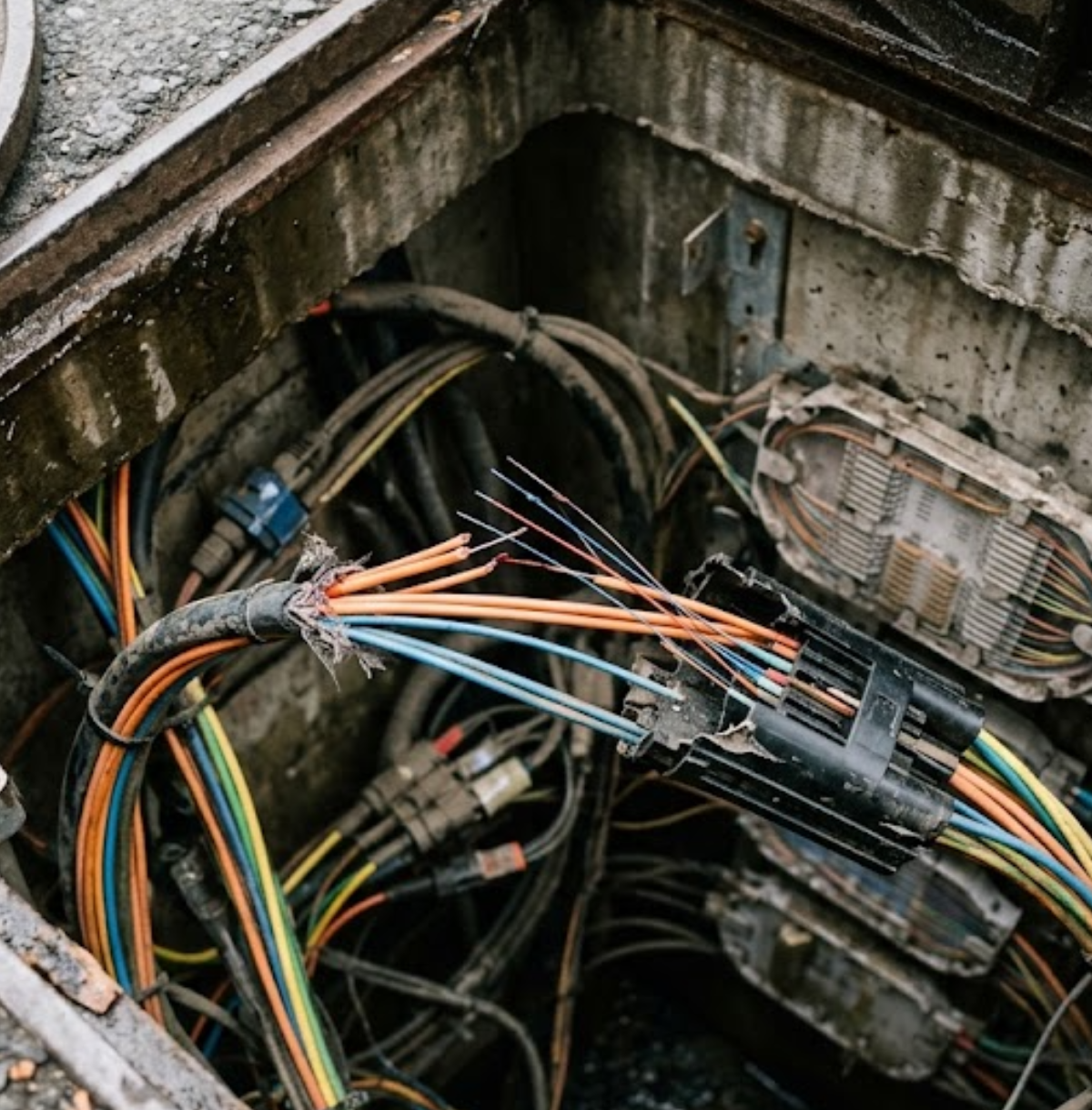
Most fibre faults trace back to a small set of causes. Knowing what they are helps explain why professional maintenance, not a DIY fix or a delayed callout, is usually the right response.
Fibre Cuts and Physical Damage
Third-party digging, construction work, or storm damage to aerial lines are the most common causes of a hard fibre cut. These need a trained splicing technician on site with the right equipment, not a general handyman, since a bad splice repair often causes further signal loss.
Moisture Ingress at Joints and Enclosures
Poorly sealed splice enclosures let water in over time, which degrades signal quality gradually rather than causing a sudden outage. This is one of the easiest problems to miss until it’s already affecting service, and one of the easiest to catch with a scheduled inspection.
Signal Loss from Bend Radius and Connector Wear
Fibre cable bent tighter than its rated radius, or connectors that have degraded from repeated handling, cause gradual signal loss that’s often mistaken for an ISP problem when it’s actually a physical layer issue. Testing with the right equipment identifies this quickly instead of leaving it to guesswork.
Why Professional Maintenance Catches These Earlier
Scheduled inspections and proper fault-finding equipment (OTDR testing, for example) catch these issues before they cause a full outage. Simunandi Green is a CAC and FAC certified fibre contractor handling fault detection and repair for network operators and property developments across South Africa. If you’re dealing with a recurring or unexplained fault, get in touch and we’ll help track down the actual cause.